
01
You write to Paul & Supparin
A short message — your dates, an approximate guest count, and the ceremony shape you have in mind. We read every enquiry personally; nothing is routed to a sales team.
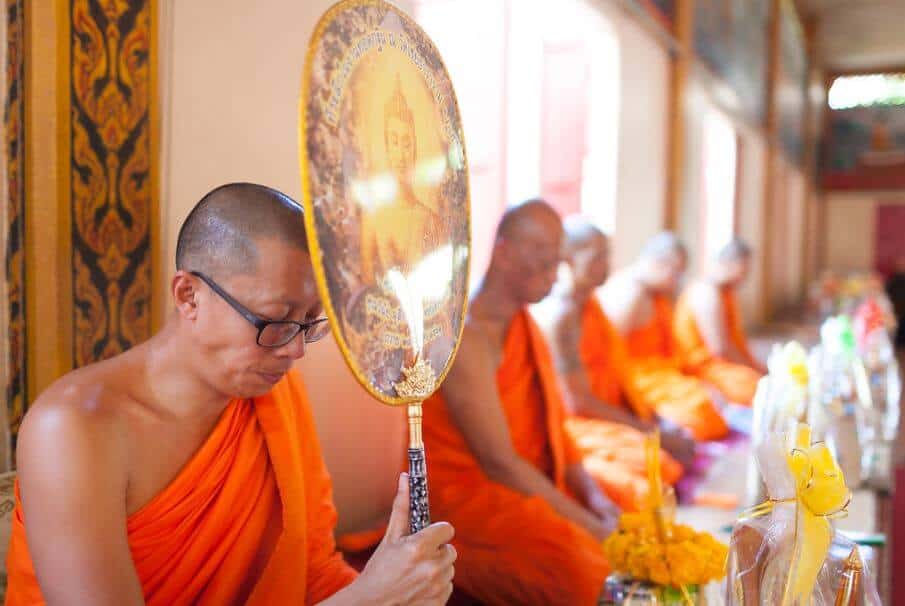
Having a traditional Thai wedding ceremony certainly has its own unique charm and romance. Considering this is one of life’s most special moments, celebrating it in a special way according to Thai traditions can make it even more meaningful, especially if your significant other is Thai.
Having a traditional Thai wedding ceremony certainly has its own unique charm and romance. Considering this is one of life’s most special moments, celebrating it in a special way according to Thai traditions can make it even more meaningful, especially if your significant other is Thai.
The sacred customs and colors accompany a traditional Thai wedding ceremony or just a couple of the things you will want to consider. You will want to decide on whether you’re going to have a full Thai Buddhist wedding or just a legal marriage registration. Either way, the legal paperwork will need to be done to make it official, but it’s definitely more fun and meaningful for you, your family and your friends if you decide to have a full ceremony as well.
Here are some of the things you can expect from a traditional Thai wedding ceremony.
According to Thai tradition, it’s customary for one of the closest friends of the groom to formally ask for the bride’s hand in marriage from her father. This person is also responsible for negotiating the amount of dowry to be paid to the bride’s family as a way of expressing gratitude for the good upbringing of their daughter.
To uphold the wedding traditions, there are things expected from both the bride and groom’s side of the family. The groom will be expected to provide two gifts, one will be gold for his bride, and the other is the dowry to be paid to the parents of the bride. For the proposal of marriage to be accepted, the parents of both families will typically meet to decide if they accept the wedding and then to further negotiate the dowry.
To select a date, you will usually be expected to consult an astrologer to help decide the day of the ceremony. The families will discuss the date for the wedding and may even decide to handle the legal registration on the same day. After a date is set, the families will then deliver invitations to their family and friends. On the evening before the wedding, you’ll need to participate in a Buddhist ceremony involving 9 monks so that you can pay respect to the Thai family’s ancestors.
The groom will be expected to make good merit but honoring the bride’s ancestors. This is typically performed by releasing some captive animals or giving money to the temple. Monks will come and bless the home of the family for the wedding and they will then feed the monks.
In regards to the dress, there are 6 common traditional styles to choose from but some couples may decide to have more western-style dresses and suits instead. If you really want to have a real Thai ceremony then it would be better to keep it within the traditional wardrobe.
In the past, after the groom has been given permission to marry the bride, it was common for the family to walk to the bride’s home while singing to music with family and friends to celebrate the occasion. The groom would then need to go through a series of chains held by the bride’s family representing breaking her bonds to get to her. He must make his way through all the gates by presenting the family with envelopes of money and in the end the parents will bring her to give to him. At this point, he will then present the dowry to the parents but in more modern ceremonies, the dowry is usually paid at the wedding reception.
Now the primary ceremony may begin with the couples kneeling together with their hands folded in a praying position. An elder will then place a Mong Kol made of cotton on their heads to signify them coming together as one of the unity of their marriage. Next is the shell ceremony where the guests will come forward with shells and pour holy water over the couple’s hands while giving them advice. Some couples may also choose to have a thread ceremony where they are bound by a white thread around their wrists and an elder will pour holy water on it. When the thread is torn it is believed that those with the longest piece will have the greatest love.
The reception will happen after the ceremony and this is when the family and friends will say their words and blessings for the couple, cutting the cake and then tossing the bouquet. This is typically when everyone will celebrate with food, drinks, and games to commemorate the eventful union of their loved ones.
After this comes the Bridal bed where the couple will be led to where they will consummate their marriage. The parents on both sides will provide them with blessings and advice for a long and prosperous marriage. The room is typically adorned with religious symbols for prosperity, harmony, love, happiness, comfort, early waking, and long life. This tradition is not expected in a more western-style Thai wedding.
There are many steps involved in a traditional Thai wedding ceremony and if you’re unfamiliar with it then let us break it down into 8 steps.
This is the religious ceremony that is expected in any Thai Buddhist wedding. If you want to have a prosperous marriage then it’s expected for you to invite 9 monks either the day before or on the morning of the wedding to bless your union and to also give thanks to her ancestors. You will also be expected to feed the monks.
After the religious ceremony step, the groom would traditionally lead a Khan-Maak parade to the bride’s house where his family and friends are singing and playing music. Once you arrive at the brides’ family home, there would be a Khan-Maak-Ek, where you would give the family a dowry payment and other gifts, usually made up of Gold, Silver, Food, and Sweets.
When the groom arrives he will need to pass through some gates or doors which are symbolic and usually made of string which he can then breakthrough to get to his bride. To get past each set of gates the groom usually also has to provide some form of payment, this can either be money or a public gesture of his love to his bride-to-be.
Once the groom has made it past and succeeded in making it to his bride, the family will then count the dowry and gifts.
When the appropriate time arrives, the bride and groom will exchange rings.
The water pouring ceremony is the most important part of any traditional Thai wedding ceremony. The bride will sit to the left of her groom and their hands will be bound together, then an elder or the wedding celebrant will pour water on them from a conch shell symbolizes their union and blessing them.
Because in Thai society attaches great importance to respecting elders so the wedding ceremony couldn’t overlook this step. Groom and bride will sit in front of their parents or the elders in the family to ask them for forgiveness then their parents will tie the holy thread on their wrists and give some valuable things to the couple such as money and gold necklace.
The last step of the ceremony is when the groom takes his bride to their Nuptial bed where they will consummate their marriage, but not before the parents of both families visit them to teach them some final lessons about life as a married couple.
Last but not least, it’s important to understand the difference between a Thai Wedding Ceremony and a legal Thai Marriage Registration. In Thailand, many people choose to not partake in the legal aspect of the marriage and select to only do a traditional wedding instead. It is recommended that you register your marriage with a local Amphur or Civil Registry for future reference and other legal matters.
For foreigners, you will need to present an Affirmation of Freedom to Marry from your embassy, along with your passport. Your Thai bride or groom will be asked to show a copy of their National ID Card and House Registration. The Marriage Registration process does not need to be done at the same time as the wedding ceremony, but can be done after the wedding day as well.
Since the Marriage Registration process involves a significant amount of time to be spent on paperwork, along with translation and legalization of documents, it would be best for you to seek the services of a Thai law firm or our very own Unique Phuket Wedding Services who can not only handle the legal aspects of the Marriage Registration in Thailand but can also help make your wedding day an unforgettable event with efficient wedding coordination services.
If this guide helped with your early wedding planning, these are the main ceremony options we arrange in Phuket. Each page explains the style, setting and planning approach in more detail.
Not sure which ceremony style is right? Send us your date, guest count and preferred setting, and we will suggest the best fit before preparing a proposal.
Request a Phuket Wedding Proposal
If a date, a ceremony shape, a venue or the paperwork is not yet clear, please start with a conversation rather than a formal brief. Paul and Supparin reply personally, in plain language, and will tell you what we honestly think before anything else.
A wedding on Phuket is a small number of decisions made carefully, not a long checklist completed in a hurry. This page is our quiet brief on how we work with couples — so you can decide whether the rhythm suits you before any commitment is asked of either side.
A short message — your dates, an approximate guest count, and the ceremony shape you have in mind. We read every enquiry personally; nothing is routed to a sales team.
Usually within one Phuket working day. The reply is a considered note, not a brochure — what is achievable on your date, where it should sit on the island, and the two or three concrete next steps.
Many couples prefer a short video call before committing. It is the fastest way to test whether we are the right fit, and to talk through venue, season and the practical brief.
When the brief is clear we issue a written quote — every supplier named, every line itemised, every assumption stated. You can change any line before you sign.
Paul leads the planning conversation, writes the quote, officiates the ceremony, and is the on-the-day point of contact for the couple. Supparin (Toom) leads the in-house floral and styling work, runs the installation, and is the on-the-day point of contact for the venue and the suppliers.
Communication is by email and short calls — calm, responsive, and in English. We do not work to a sales script and we will not pressure a date. Couples who choose to plan with us almost always do so after a considered conversation, not on a first reply.
Planning here is unhurried by design. The wedding is one day; the months before it are a relationship.
Most couples we plan with live in another country and arrive in Phuket close to the wedding date. Fifteen years of doing this means the rhythm is unhurried for you — we site-visit on your behalf, share photographs and short films, hold calls at sensible hours, and carry the local logistics so you do not have to.
Where a site visit is possible, it is welcome but never required. Couples who arrive only a few days before the wedding are met, briefed in person, and walked through the day before we run it.
Twelve months is comfortable for a villa or resort wedding. Six months is enough for an elopement or a beach ceremony. Shorter is sometimes possible — please ask before assuming it is not.
No. Elopements and small beach ceremonies are a meaningful part of what we do. The two of you on a quiet beach is taken as seriously as eighty guests at a villa.
Yes. Paul officiates the ceremonies, Supparin leads the floral and styling install, and one of them is the on-the-day point of contact. The wedding is not handed off.
No. We recommend venues and suppliers we know personally and will tell you honestly where they suit you and where they do not. If you arrive with a venue in mind, we will plan around it.
Costs, paperwork, season and the practical brief.
What ceremony packages start at, and how villa and resort weddings are quoted.
Beaches, villas and resorts we have personally worked at.
Verified weddings we have planned and run — with photographs and couples' words.
A short, considered form covering your date, guest count, ceremony shape and venue preference. Paul or Supparin reply personally — usually within one Phuket working day — with the two or three concrete next steps for your wedding.