
01
You write to Paul & Supparin
A short message — your dates, an approximate guest count, and the wedding plans you have in mind. Paul and Supparin are your direct planning contacts, from discussing your plans through to the wedding day.
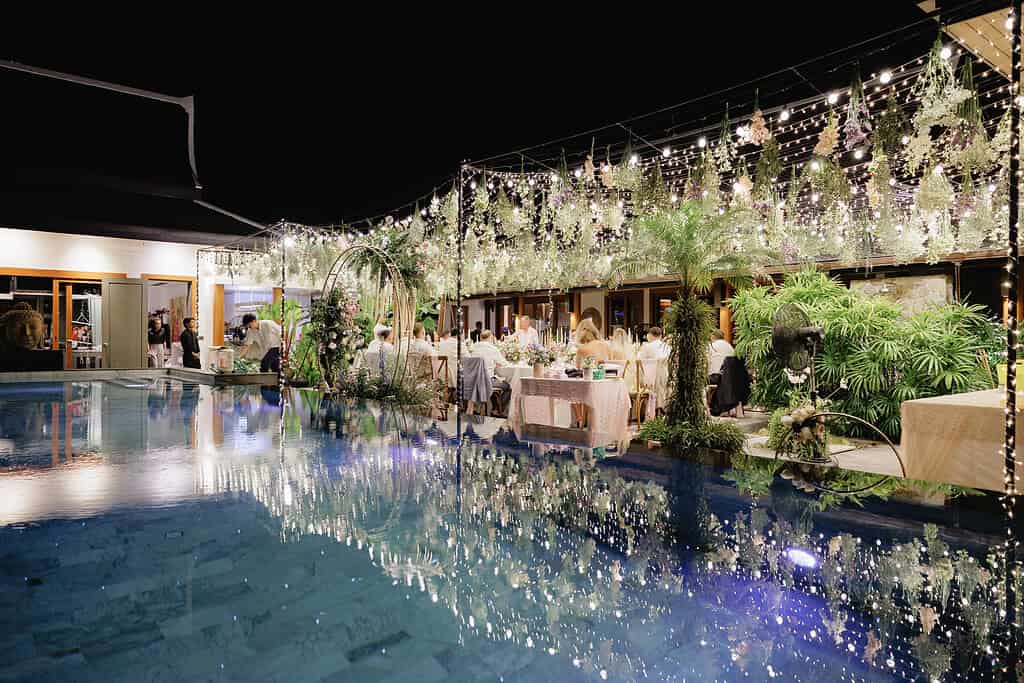
A private villa gives you the day on your own terms. It also makes you responsible for almost everything a resort would otherwise carry — catering, bar, layout, lighting, sound, power, transport and the wet-weather plan. This page is our honest brief on what a villa wedding really involves.
A resort wedding rents the wedding-day infrastructure alongside the venue: kitchens, bar, furniture, service staff, contingency space, in-house power and a sound system. A villa wedding rents the place and brings the infrastructure in. That is the trade — a more private, more personal day, in exchange for a fuller production brief.
The villa shape is right when the day is small enough to belong inside one house and one garden, when the couple wants the family to stay together for the weekend, and when the food, the music and the schedule are meant to feel set by the couple rather than by a hotel. If you are still weighing the two, we answer the question directly in villa wedding vs resort wedding in Phuket.
Catering at a villa is fully designed for the day. The team works with trusted Phuket caterers to set a menu around the season, the guest mix and the dietary requirements; the menu is tasted ahead of the event for larger weddings. Bar packages — beer and wine, full bar, or a curated cocktail list — are quoted separately so the couple can match the bar to the evening they actually want.
Service staffing follows the menu. Plated service needs more waiters than family-style; a buffet needs fewer but a longer setup. We size the kitchen and front-of-house team to the menu before the venue is confirmed, so the villa's back-of-house space is checked against the brief rather than guessed at.
The villa garden is laid out twice for almost every wedding: once for the ceremony, once for the reception. Furniture is brought in to suit each phase — ceremony chairs, signing table, then dining tables, lounge seating and a bar. The planners plans the layout against the villa's actual dimensions and the position of the sun, not against a stock template.
Lighting is the difference between a villa garden that looks magical after sunset and one that looks like a patio. Pool uplights, festoon lines, lanterns along the paths, and pin-spot lighting on the tables are all specified per villa. Sound is sized to the guest count — a small band needs a small system; a DJ for fifty people needs more — and is balanced so it never spills past the villa's neighbours.
Most Phuket villas were not wired for a wedding. We brief the production team to bring distribution and, where needed, a silent generator, so the kitchen, the bar, the sound system and the lighting all draw from a setup that cannot trip the villa's normal supply.
Most villas are at the end of a long private drive and most guests will not be staying in the villa itself. Transport is planned: air-conditioned shuttles or private cars between the guest hotels and the villa, a timed return run for the end of the night, and a late car for the couple. This is set in the schedule, not improvised.
A villa wedding needs a covered fallback for the ceremony and the reception, not just one of them. We brief the villa's covered terrace or — when needed — a marquee, so the day has a real plan B that does not collapse the schedule if a Phuket shower passes through. This matters most in the green season (May–October), but it is part of every villa brief regardless of the month.
A villa wedding runs against a written schedule that starts when the first supplier arrives and ends when the last car leaves. The planners writes the schedule against the villa's actual constraints — driveway access, kitchen cut-off times, neighbour quiet hours — and runs the day against it on-site.
Read alongsideIf your date, wedding plans, venue or paperwork are not yet clear, please start with a conversation rather than detailed plans. Paul and Supparin are your direct planning contacts, from discussing your plans through to the wedding day.
A wedding on Phuket is a small number of decisions made carefully, not a long checklist completed in a hurry. This page is our quiet brief on how we work with couples — so you can decide whether the rhythm suits you before any commitment is asked of either side.
A short message — your dates, an approximate guest count, and the wedding plans you have in mind. Paul and Supparin are your direct planning contacts, from discussing your plans through to the wedding day.
For enquiries that fit our services and starting budgets, Paul or Supparin usually reply within one Phuket working day. We can then discuss what is achievable on your date, possible venues and the next steps.
Many couples prefer a short video call before committing. It is the fastest way to test whether we are the right fit, and to talk through venue, season and the practical brief.
When the brief is clear we issue a written quote — every supplier named, every line itemised, every assumption stated. You can change any line before you sign.
Paul leads the planning conversation, writes the quote, officiates the ceremony, and is the on-the-day point of contact for the couple. Supparin (Toom) leads the in-house floral and styling work, runs the installation, and is the on-the-day point of contact for the venue and the suppliers.
Communication is by email and short calls — calm, responsive, and in English. We do not work to a sales script and we will not pressure a date. Couples who choose to plan with us almost always do so after a considered conversation, not on a first reply.
Planning here is unhurried by design. The wedding is one day; the months before it are a relationship.
Most couples we plan with live in another country and arrive in Phuket close to the wedding date. Fifteen years of doing this means the rhythm is unhurried for you — we site-visit on your behalf, share photographs and short films, hold calls at sensible hours, and carry the local logistics so you do not have to.
Where a site visit is possible, it is welcome but never required. Couples who arrive only a few days before the wedding are met, briefed in person, and walked through the day before we run it.
Twelve months is comfortable for a villa or resort wedding. Six months is enough for an elopement or a beach ceremony. Shorter is sometimes possible — please ask before assuming it is not.
No. Elopements and small beach ceremonies are a meaningful part of what we do. The two of you on a quiet beach is taken as seriously as eighty guests at a villa.
Yes. Paul officiates the ceremonies, Supparin leads the floral and styling install, and one of them is the on-the-day point of contact. The wedding is not handed off.
No. We recommend venues and suppliers we know personally and will tell you honestly where they suit you and where they do not. If you arrive with a venue in mind, we will plan around it.
Costs, paperwork, season and the practical brief.
What ceremony packages start at, and how villa and resort weddings are quoted.
Beaches, villas and resorts we have personally worked at.
Verified weddings we have planned and run — with photographs and couples' words.
A short form covering your date, guest count, wedding plans and venue preference. For enquiries that fit our services and starting budgets, Paul or Supparin usually reply within one Phuket working day.